Helping today  Helping tommorow

Helping today Helping tommorow
May 25, 2026
Jheel Krishi is an innovative community-led urban agriculture and wetland conservation initiative by Youth Prochesta Foundation of Bangladesh. The project was developed by building on the experiences and lessons learned from the ReWET Agroecological Demonstration Site in Korail, where community participation proved to be an effective approach to restoring and managing urban wetlands sustainably.
Inspired by this experience, Jheel Krishi aims to support the long-term conservation and maintenance of Hatirjheel Lake by actively engaging local communities in its protection. Rather than relying solely on external management, the project encourages residents to become the custodians of the lake through sustainable agriculture, environmental stewardship, and shared responsibility.
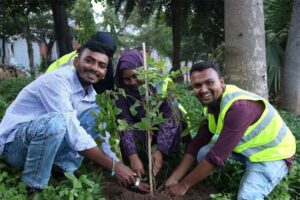
The initiative transforms selected lake edges into productive agroecological spaces where local residents cultivate vegetables and native plants while helping to maintain the surrounding environment. This community-based approach strengthens local ownership, discourages waste dumping, enhances biodiversity, improves environmental awareness, and contributes to a cleaner and healthier lake ecosystem.
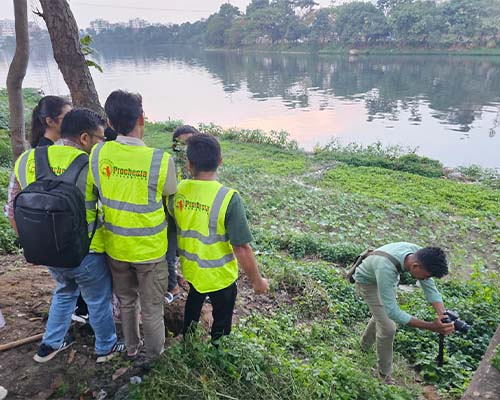
Currently, Jheel Krishi is being piloted along a 1-kilometre stretch of the Hatirjheel Lake in Tejgaon. The pilot demonstrates how urban agriculture, wetland conservation, climate adaptation, and community participation can work together to create a practical and scalable model for sustainable city development.
Beyond food production, the project serves as a living laboratory where communities, students, researchers, government agencies, and development partners can collaborate to develop innovative solutions for urban resilience and environmental sustainability. It also creates opportunities for sustainable livelihoods, strengthens food security, restores biodiversity, and promotes climate-resilient cities.
Our long-term vision is to replicate this community-driven model across lakes, canals, wetlands, and urban waterbodies throughout Bangladesh, enabling local communities to become the primary guardians of their natural resources while building greener, healthier, and more resilient cities.